
Genesee County City Directory Collections
Flint is the main shelf for historical name-and-address research in Genesee County. The Gloria Coles Flint Public Library holds city and county directories alongside yearbooks, local publications, organization histories, and Flint or Genesee city and village histories. The Library of Michigan directory guide adds statewide catalog access, print volumes arranged by city or county, selected microfilm or fiche, and some database access. Check the title page before treating a Flint volume as countywide, because an edition can be limited to the city or can include nearby communities.
| Collection | Years | Where Held | Access |
|---|---|---|---|
| Polk and supplemental Flint directories | Late 1800s onward, depending on edition | Flint Public Library and Library of Michigan | Catalog, print, selected microfilm or fiche, and some library database access |
| Flint City Directories | 1894 | University of Michigan material on Google Books | Digitized scan with OCR |
| Flint Michigan City Directory | 1965 example, with other editions linked | University of Michigan material on Google Books | Digitized reference page |
| Flint directory microfilm | 1929-1932 | National Archives listing | Historical microfilm reference |
Polk is the key name-listing publisher identified by the Library of Michigan, while Bresser, Robinson's, Norton's, and Johnson Publishing add useful Flint material. County directories and state gazetteers can add rural or professional context that does not appear in a city-only title. The research did not verify a separate Genesee reverse-directory run with dates. A Flint edition may have a street index or address section, but it should not be called a dedicated reverse directory unless its own title and contents establish that.
Genesee County City Directories at FPL
The Flint Public Library's Local History & Genealogy Room is on the lower level. For a Genesee County city-directory search, its published materials reach back to the nineteenth century, and the room has computers, print and photo scanners, microfilm readers and scanners, color printing, USB saving, and email delivery for scans. Staff help with use of the collection, and Book An Expert offers a dedicated 30-minute appointment. Fragile material and some microfilm are in Special Collections, where staff load the reader. Check the live schedule before a visit because the posted temporary hours can change.
Use the Flint Public Library Local History & Genealogy collection as the starting point for catalog and collection context. Its local holdings make it possible to move from an obituary index to microfilm, a directory, a yearbook, or a map without confusing an online index for the original record. For Genesee County work, record the title, volume or year, page, collection, and whether the item was an index or a scanned original. The library identifies its Ancestry Library Edition as library-use-only, so a home search result may not reproduce the same access.
Reading Genesee County City Directory Entries
A historical entry is a compact clue, not a full person profile. A Genesee County city-directory search may reach a Flint or nearby-community edition that gives a personal name, street address, occupation, household or marital notation, and sometimes business context. The 1894 digitized volume demonstrates that shape. Read the edition's abbreviation key before expanding shorthand, and read the street index before deciding that an address applies to the person named. A printed address establishes an association in that edition, not a current location or an ownership claim.
| Personal name | Use the spelling as printed, then note variants for later searches. |
|---|---|
| Street address | Record the number and street exactly, then check the street index when present. |
| Occupation label | Useful for separating same-name entries and comparing adjacent years. |
| Household or marital notation | May identify a relationship shorthand, but the edition key controls its meaning. |
| Business context | May supply a further historical lead that needs independent confirmation. |
- Criss-cross directory
- An address-ordered directory format. Research did not verify a separately titled Genesee County run, though a Flint street index can be a partial substitute.
- Householder index
- A name arrangement centered on a household lead, not proof of every person connected to that address.
- Abbreviation key
- The volume's own explanation of its shortened words and symbols. Photograph or transcribe it with the entry.
Flint City Directories Online
The digitized 1894 Flint City Directories volume is a useful online reference point for Genesee County research, especially when a search begins with a surname and an approximate place. OCR helps locate a possible entry, but it can misread both names and street numbers. Confirm the text against the scanned page and, where possible, an adjacent year. The related Flint Michigan City Directory record includes a 1965 R.L. Polk example and links to other editions, but each edition still needs its own title and boundary review.
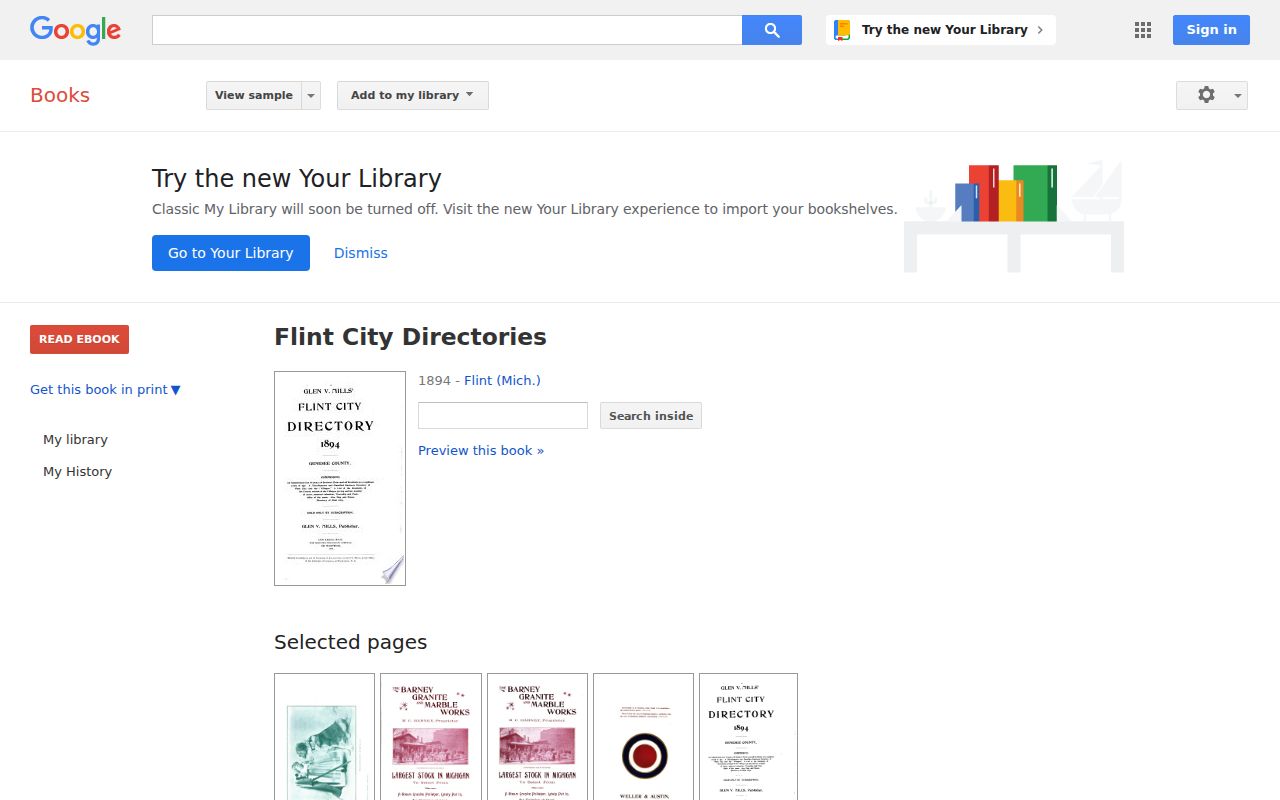
The image shows the digitized directory reference rather than a complete resident database. Treat the scan as a page-level historical source, retain the edition and visible page information, and use another record when a name or number is unclear.
Genesee County City Directories on Film
The National Archives city-directories listing identifies Flint microfilm for 1929 through 1932. Those volumes make a useful bridge in a Genesee County chronology between a census-era household and a later address, but they are historical records rather than current resident data. Pair a directory year with the matching census year only after recording the address as printed and any spelling or household notation that differs between sources.
A clean comparison keeps the source roles separate: a directory can show a printed name and address in one edition, while a census may document a household in its own enumeration. A difference may be a move, a variant spelling, a reporting difference, or a coverage boundary. It is not proof of a mistake by either record. Note the directory title, year, page, and the census source used for the comparison.
| 1894 | Digitized Flint directory reference on Google Books. |
|---|---|
| 1929-1932 | Flint directory microfilm listed by the National Archives. |
| 1965 | R.L. Polk example linked through the Flint Michigan City Directory record. |
Note: Flint title words do not automatically establish coverage for every Genesee County community, so confirm the edition boundary before carrying a finding outside Flint.
Trace Genesee County City Directory Households
Use a short Genesee County city-directory sequence rather than building a long name list. Start with the first edition that places the person in Flint or another named community, then move one edition at a time. The goal is to preserve what each book actually says and to expose gaps. When an edition lacks the name, record that the person was not located in that edition. Do not turn an absence in one volume into a claim that the person was absent from Genesee County.
- Locate the person in one directory and copy the printed spelling, address, year, and page.
- Check the title page, geographic scope, and abbreviation key for that edition.
- Move forward and backward through nearby editions, recording each address or notation change.
- Use a matching census-year source to test the household context without assuming the two records use identical rules.
- Use an obituary index, biography file, deed, tax record, or archive series to verify a major identity or address conclusion.
For an address-centered historical question, the directory collection supplies the printed household trail, while the Genesee County past residents reference follows property, tax, map, and deed evidence backward. Keeping the two trails distinct prevents a directory name from being presented as a deed party or a tax name from being presented as an occupant.
Genesee County City Directory Obituaries
The Flint Journal obituary indexes cover paid obituary indexes for 1920-1959 and from 2000 to the present, with files arranged by listed decades. An index is a lead, not necessarily the full notice. The library can provide microfilm help and offers an advance research request for approximately one hour at $25, due even if the search does not succeed. Confirm current terms before requesting help.
The Genesee County Biography File can also point to Flint Journal items, local histories, and clippings. It may connect a person with an address, local event, or organization, but nicknames and incomplete residence details are common in newspaper material. For a Genesee County household, cross-check an obituary or biography lead against a directory, cemetery record, probate file, or recorded instrument before drawing a conclusion.
Genesee County City Directory Archives
When the Flint shelves stop answering the question, the Archives of Michigan is the next research layer. Michiganology and finding aids make some material visible online, but the Archives notes that many collections remain onsite. The Genesee County guide names record series and date ranges, which makes a request stronger when it identifies the series title and record group instead of asking for broad old county records.
For example, the guide lists probate case-file series for 1857-1883, 1870-1875, and 1900-1973. It also lists naturalization papers, declarations, petitions, certificate stubs, military discharges, GAR posts, cemetery files, tax records, and older court records. These series can resolve a changing name or a move that the city directory alone leaves unclear. They are not countywide rolls, and each has its own access and coverage limits.
The Archives collections page is the source for the Michiganology and finding-aid route. A request about a Genesee County person is more useful when it carries a date range, a place, and the directory evidence already located.
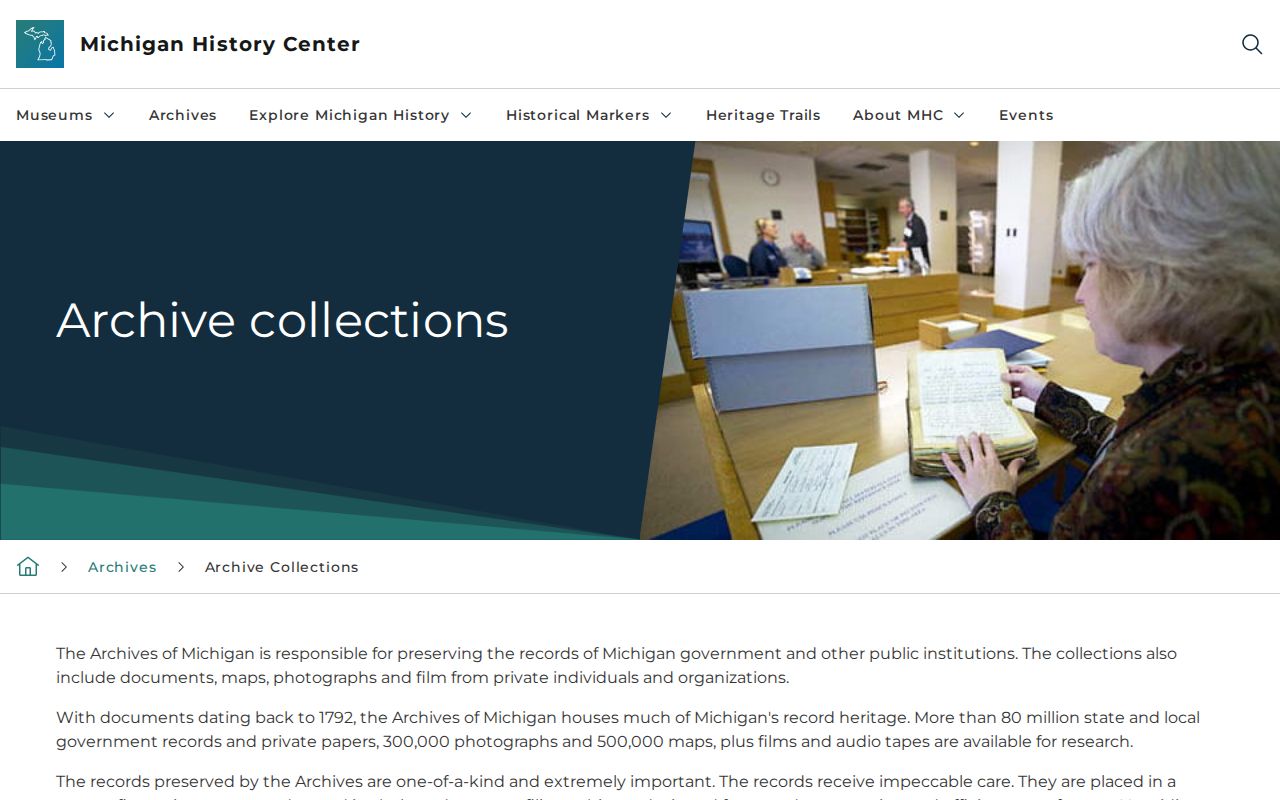
The Archives capture reinforces the change in method: online discovery can identify a collection, while a finding aid or reading-room visit may be needed to inspect the underlying Genesee series.
Genesee County City Directory Boundaries
Genesee County directory geography is part of the evidence. A Flint title may cover only the city, or it may include a nearby community, so the title page and edition boundary matter. Fenton is a useful boundary test because its geography is partly in Oakland and partly in Genesee County. Preserve the municipality as printed and use a parcel check when county jurisdiction matters.
That caution also applies to street names and numbers. FPL's multiyear street maps, Sanborn maps, and plat maps can add the physical context that a directory line lacks. A map can locate a route or building footprint, but it does not prove a named person occupied it. The strongest historical conclusion labels the evidence as a directory association, a recorded conveyance, a tax association, or map context.